If you missed part one, click here.
Chapter Four: Hindsight and the What If Game
Joyless is truly the best word to describe the last ride of the rodeo as players, media, front office, and fans were not having fun following that team that year. The chemistry from the locker room stunk like stinky cheese buried in a pile of deep manure that was inside a sweaty locker from the 18th century. As that Salt Lake Tribune article pointed out, the Jazz were entering the offseason with those locker room questions but also no cap room and no draft picks. Admittedly, it was bleak.
So, the Jazz blew it up. All the way up.
Yet.
Did the Jazz need to blow it up with three big sticks of dynamite instead of just one? In the same off-season, Snyder and the Jazz parted ways while Gobert and Mitchell were traded. The reset began.
In retrospect, there are a lot of what-ifs to think through.
What if the Jazz had just fired Snyder? What if they still hired Will Hardy? And what if Hardy retooled the offensive and defensive schemes around Mitchell and Gobert?
Could they have had another 50-win season? It seems plausible. Could they have some playoff series wins? When things break right, why not. Tatum and Brown had seven years together. The Jazz broke up Gobert and Mitchell after five. Would we have won a title these last two years? No. I know that the answer is no. But would we have had some more fun basketball, some wins, and some people on the court right now who are playing well and worth cheering for? Without a question in my mind.
Like what you are reading? Make a one-time donation and buy me a soda! This next drink is for you, giving me the energy to write something else of value for you. Cheers!
Choose an amount
Your contribution is appreciated.
DonateAnd OK. What if we just trade one? What if we just traded Gobert?
We still get young talent like Walker Kessler to take the center position and then some future draft assets, ya know, just in case Mitchell doesn’t stay long-term. For two years, though, he is here and he is playing with much of the core. Maybe it’s with Snyder or maybe it’s Hardy. Either way, Donovan Mitchell is the star to showcase Salt Lake for All-Star weekend or to highlight the 50th season in franchise history. Maybe Mitchell resigns with Utah, like he just did for Cleveland, so we extend the window for contention just a little bit further. If he does, do we retool enough and get enough talent on the margins to go to a Western Conference Finals? Maybe – Dallas just did. Do we win a title? Let’s be real, we still know that the answer is no.
And OK, what if we keep Donovan but he doesn’t resign or he does request a trade after two years in Utah?
Well, he stuck it out with Cleveland for those two years and they had playoff opportunities, could we not expect the same in Utah? But sure, he wants to be traded or we know he won’t resign so we take the hint and trade him. Cool – you trade him for a package of talent just like we did two years ago. He continued an elevated, All-Star level of play. He is still a top-20 player in the league, more refined perhaps. If a trade happened two years later, you’re still dancing with a team hoping he’d extend or resign but if that assurance comes, you would get stuff. Is Markkanen still on the table? Sexton? Someone else, like Mikal Bridges from Brooklyn (now NY). Who knows. This is part of the what-if game that is too foggy to forecast.
My point is, though, that Jazz could’ve played hard and won games and celebrated All-Star Weekend and the 50th season with talent and success, a product worth cheering for. Instead, we broke too early. Started the rebuild too early. If the prize drafts were always ’25 and ’26, couldn’t the Jazz have given contention another shot and given fans one or two more seasons to cheer for AND THEN set themselves up with trades for Cooper Flagg and Ace Bailey?
Absolutely.
Chapter Five: Boston Celtics and 2024
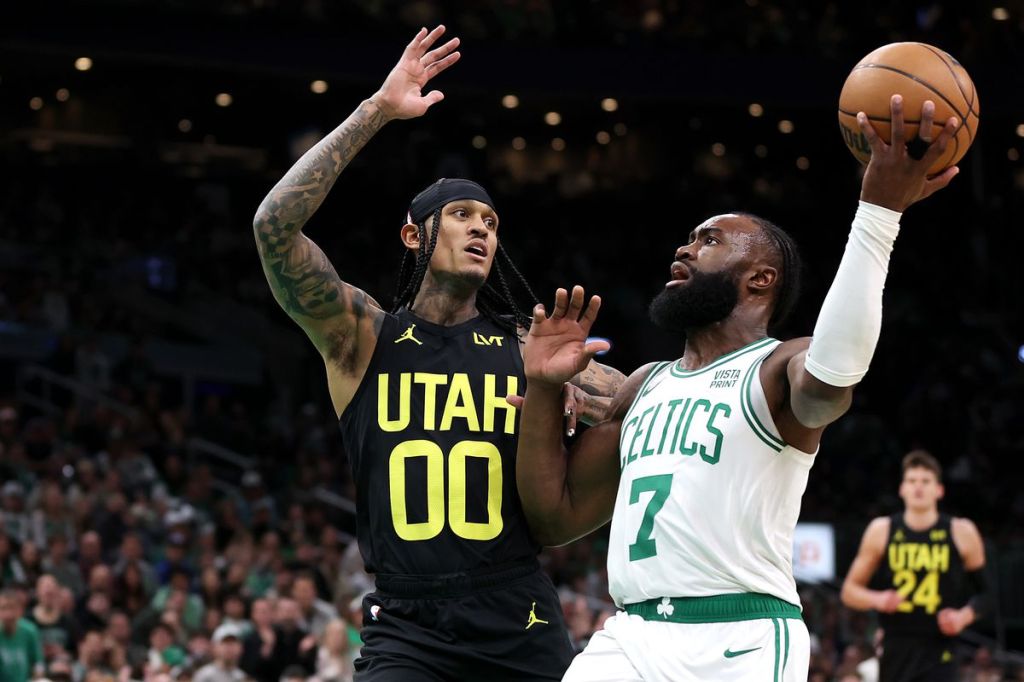
The Boston Celtics winning their 18th franchise championship this May of 2024 cemented the end of the two-year interim since the Jazz decided to blow up that starting lineup and move on from nearly every key contributing part, including Coach Snyder.
Despite trade offers for big stars (like Kevin Durant), the Celtics consistently and constantly retooled around their two franchise stars, Jayson Tatum and Jalen Brown, over those seven years to give them a chance to keep winning, and hopefully win big. Unlike Utah, the team was making Conference Finals and NBA Finals appearances along the way, justifying their vision for honoring longevity in team building.
Those Conference Finals and this ’24 banner brought back a personal resentment for the Celtics given a series of connections the franchise has shared with Utah over the years. Here are five anecdotes:
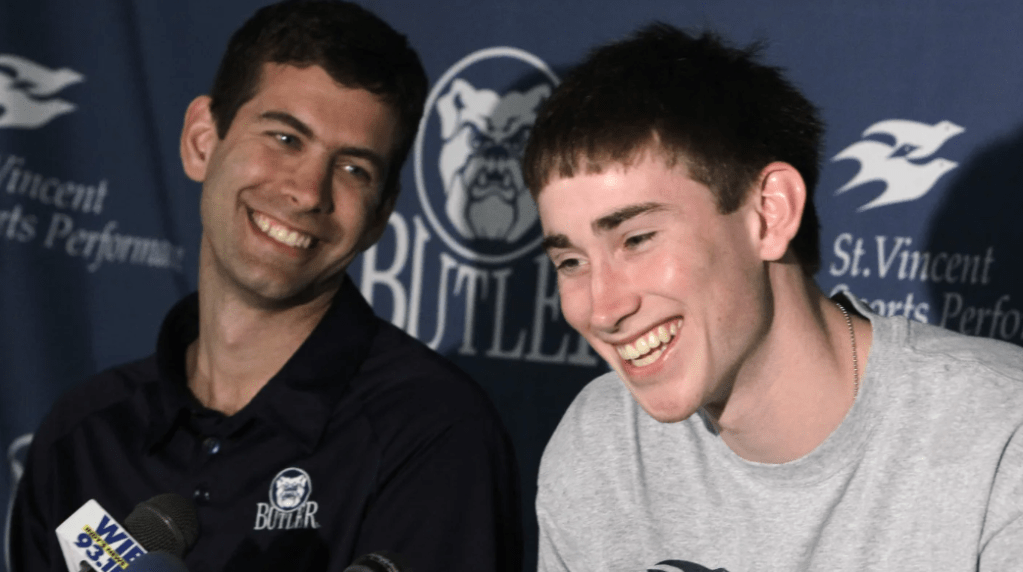
- There were legitimate arguments over which young, bright, new coach you’d want over your squad: Brad Stevens or Quin Snyder (Snyder notched a third-place finish in the Coach of the Year race in 2019-2020, eighth in 2018-2019, second in 2017-2018, sixth in 2016-2017; Stevens finished top-ten at eighth in 2019-2020, third in 2017-2018, fourth in 2016-2017, and sixth in 2015-2016).
- On the fourth of July of 2017, Gordon Hayward took a few days and wrote an essay to declare his independence from the Utah Jazz and join the Boston Celtics as a free agent. His decision was also influenced by the prospect of reuniting with his college coach, Stevens.
- Another easy one: Tatum and Mitchell are from the same draft class.
- Or, it’s a stretch, but I think the Jazz’s best shot for a finals berth was in that 2020-2021 season where they disappointingly lost in the second round to the Los Angeles Clippers. That season, the Jazz won 52 games to win the Western Conference; the Celtics struggled all season, finishing 7th in the East. While the Jazz lost to a Clippers team they should have beaten, the Celtics were upset in the first round by a dysfunctional Brooklyn Nets team with Kevin Durant, James Harden, and Kyrie Irving. By the next season, it was the Nets who blew it up, not the Cs.
- Danny Ainge was the primary architect to build the Celtics, drafting Tatum and Brown and maneuvering draft picks and assets to build a contender with them. As you know, Ainge is in the driver’s seat in Utah now. As for another recent crossover, Hardy was on the Celtics bench as an assistant coach, and likely heir to the throne, before coming to Utah and before an opening in Boston popped up.
I’m sure many in Boston wouldn’t consider the Jazz their foil, so I may be one-sided in this assertion. The grand umbrella ‘what-if’ storyline is if the Jazz could’ve made a move or two differently in the Boston blueprint to make the outcome of any of those three seasons differently.
In fact, if the Jazz took any tips from Boston and committed to the franchise cornerstone we know that the last two years would have been more fun than we got. To give relevancy to that starting lineup from two years ago, the burn is fresh as many of the key contributors of that Utah Jazz roster all saw individual and team success this season, as well as tweets with their names and new contracts or team situations posted online.
- Conley; In February, the Minnesota Timberwolves gave him a 2-year, $21-million extension. He’ll likely retire with Minnesota.
- Mitchell; after two years of “he’s leaving Cleveland” storylines, Mitchell agreed to a three-year, $150 million extension with the Cavs. Sure, the third year is a player-option and those storylines will surely pick back up in a year or two, but he’s locked and loaded with the team the Jazz traded him to.
- O’Neal; traded from the Jazz to the Nets and then the Nets to the Suns, O’Neale found his home in Phoenix with a four-year, $44 million deal, all of it guaranteed. With a talented top-heavy team, O’Neale will be a key cog for a team that desperately needs a utility knife.
- Bogdanovic; traded from the Jazz to the Pistons and then the Pistons to the Knicks, ‘Bogey’ was traded yet again at the start of free agency when he went to the Nets in a package that brought the Knicks closer to contention. If there is anyone from the former team to feel bad for, it’s Bogey who is on a bad team while recovering from a bad injury.
- Gobert; while not on paper and ink quite yet, the Minnesota Timberwolves hope to extend and keep the big fella as a T-Wolf for as long as they can. As you know, he also won Defensive Player of the Year for the fourth time if that means anything.
- Oh, and adding salt to injury, former glue guy Ingles signed a one-year to join Gobert and Conley in Minnesota for a $3.3 million minimum deal.
Chapter Six: But, Here We Are
From those trades and in the two years since the Jazz spun full circle to enter a rebuild. They also got and kept veteran talent that kept them from being all-in as a tank train. Refreshing on the current roster construction, here is what the Jazz got and what things have turned into:
- For Gobert, the Jazz received five players, four first-round draft picks, and a pick swap.
- Specifically, those players were: Malik Beasley, Patrick Beverly, Leandro Bolmaro, Walker Kessler, and Jarred Vanderbilt.
- Beasley and Vanderbilt were traded for a Lakers 2027 first-round pick.
- Beverly was traded for Talon Horton-Tucker who was my least favorite player for two years and is no longer with the squad. Bolmaro is no longer on the roster either.
- Kessler, of course, had a great rookie season and is a strong defender. He regressed for year two and played summer league before year three. Will he be a quality starter? The jury is still out. Is he a future All-Star? No.
- From the draft picks, the Jazz used the 2023 selection on guard Keyonte George who became the point guard starter for the Jazz during his rookie season. He will always be able to score in the NBA and looks like an explosive, dynamic modern NBA guard. Will he be a quality starter? Yes. Is he a future All-Star? No.
- The draft class in ’25 and ’26 is loaded, so having additional firsts is great. The Timberwolves will also be great, so they will be late 20s at best. Could they get quality starters? Yes. Future All-Stars? No, unless they package the picks to move up higher.
- Specifically, those players were: Malik Beasley, Patrick Beverly, Leandro Bolmaro, Walker Kessler, and Jarred Vanderbilt.
- For Mitchell, the Jazz got three players, three first-round picks, and two pick swaps.
- Specifically, those players were Collin Sexton, Lauri Markkanen, and Ochai Agbaji.
- Sexton and Markk are great. Those two players alone can win games, and did so, which could be argued messed up the Jazz timeline. Are they quality starters? Yes, for sure. Are they future All-Stars? Markk was for Salt Lake City in ’23 and Sexton, honestly, could be fringe with a few more leaps and a few good breaks.
- The Jazz traded Agbaji (and Kelly Olynyk) for the Raptors’ draft pick in this 2024 draft.
- Specifically, those players were Collin Sexton, Lauri Markkanen, and Ochai Agbaji.
- So for draft picks, the Jazz used the Raptors’ pick on Isaiah Collier from USC at the 29th selection. Based on talent alone, the Jazz took the best player available in Collier who many, a year earlier, had projected as a top pick out of high school. Based on the summer league, he looks great. Will he be a quality starter? Yes, I can envision that. Is he a future All-Star? Too early to tell.
- Just like with Minnesota, the Jazz will get a ’25 first-round pick from Cleveland to take a crack at the top talent coming into the NBA next year. They also received swap opportunities from Cleveland to use in the ’26 draft. So, to copy and paste what was written above: the draft class in ’25 and ’26 is loaded, so having additional firsts is great. With Mitchell on Cleveland’s roster for the next two years with his recent extension, they’ll be competitive and try to win in the East, so the picks will probably be in the 20s as well. Could they get quality starters? Yes. Future All-Stars? No, unless they package the picks to move up higher.
In addition to the next two draft classes, we know the Jazz have a treasure trove of draft pick assets to use in the future. They can use those to move up, find talent, or swing for the fences. I know that logic and I know that story.
But.
They already have a bunch of young players on their team. Aside from a few veterans, the roster is more in the age range of a college team. Consider all that is in development:
- Walker Kessler, a third-year player drafted in 2022 has been starting and playing big minutes.
- Taylor Hendricks, Brice Sensebaugh, and Keyonte George drafted in 2023 have been starting and playing big minutes and are clearly part of the future. The new core, if you will.
- Cody Williams and Isaiah Collier drafted in 2024 will need reps and big minutes to figure out who they are, but they can be rotational pieces from day one. If we are rebuilding, they should be.
If you need help with math, that’s six players already. We haven’t mentioned G-League stars like Jason Preston or recently resigned developmental projects Johnny Juzang and Micah Potter, or the other 2024 draft pick Kyle Filipowski. That’s four more players to figure out, with odds that one or two will be regular lineup contributors throughout the rebuild.
Then, you’re telling me we will add:
- Two first-round picks from Cleveland and Minnesota in 2025. Hopefully, good players who can help immensely.
- Two first-round picks from trade and their own in 2026. Hopefully, good players who can help immensely.
- Four first-round picks in 2027 (Cleveland, Minnesota, their own, and a top-four protected pick from LA).
As my kid would say, that’s a butt-load of stuff coming in; potentially eight young stars that will need minutes and an expectation to become something in the NBA for the growing Utah Jazz. Within three years from now, the Jazz would have 14 players under six years of experience that should be NBA pieces, not counting the G-league, 2-way contract, second-round steal kind of guys.
14! That number is crazy to me!
Like what you are reading? Make a one-time donation and buy me a soda! This next drink is for you, giving me the energy to write something else of value for you. Cheers!
Choose an amount
Your contribution is appreciated.
Donate Steve Godfrey Writes
Pingback: Thoughts from a Tortured Fan: In Retrospect (part one) | Steve Godfrey Writes
Pingback: Thoughts from a Tortured Fan: In Retrospect (therapy, part three) | Steve Godfrey Writes
Pingback: How the 2025 NBA Playoffs May Shape My Son’s Sport’s Fandom | Steve Godfrey Writes