Two decades ago, in 2003, I burned a CD at my friend’s house that would become a start-to-finish favorite that I will always remember. This is a road trip with that CD, with detours and stops along the way. Buckle up.
Subscribe to get access
Read more of this content when you subscribe today.
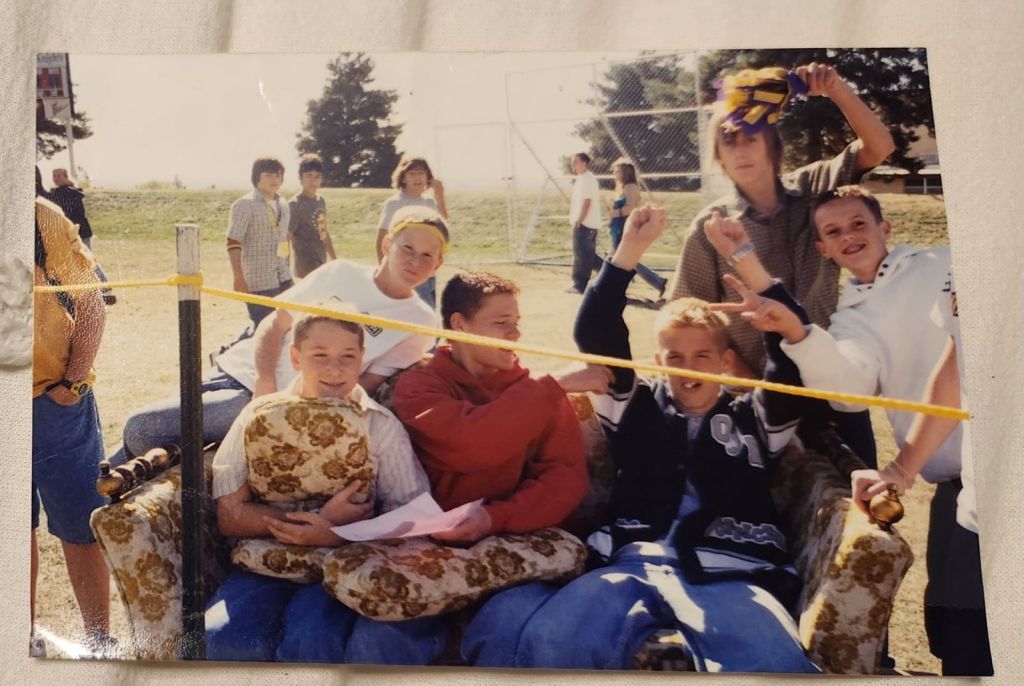
When I was in 7th grade at North Ogden Junior High, I met two dudes who would become lifelong friends: Trevor and Kortland.
It was the school year 2002-2003 and I had only lived in Utah for two years, going to Green Acres Elementary and having a handful of friends from my classes and neighborhood. Two of those were Josh and Denton. Going to a junior high meant I would be a little fish in a bigger pond, and that made me nervous. I don’t even remember how I met Trev or Kort, but I did and my 7th grade year was full of so many memories with them, and with the five of us in a new group.
I remember asking J.F., the hottest 9th grader, to dance while my dudes cheered from the sidelines at the only formal dance we had. I was so small (still am) and she was taller, but she had dark brown curls and bright blue eyes and it was one of the best, but fastest, slow songs of my life. That was the first of our interactions; the next, and last, was when I asked her to sign my yearbook at the end of the school year.
Before that dance, we played laser tag – like, 30 minutes out of town in Clearfield. We balled so hard and played so long and it was just epic. Maybe it was before, maybe it was after, I remember going out to Applebees with these guys – how we got there, I don’t know. We walked around the Riverdale parking lots afterward. We tried talking to girls; while waiting outside for our buzzer to give us a table, I remember we somehow got a girl to tie my shoes. I remember sleeping over at Trevor’s house in his backyard, which was by the cemetery, and trying to tell ghost stories. Denton, the serious athlete, and just big and tall with a low, low voice, started his story slowly and only uttered three words, “Something was wrong” before we all started laughing too hard. I want to claim it was this night that I learned about peeing my name. Meaning, pee the letters of your name on the road. Try it in cursive, so you don’t have to pinch and stop. Trevor said he did his first, middle, and last name on the black asphalt whenever he could.
On another night, I remember telling my mom I was sleeping over at Trevor’s house. Trevor said he was sleeping at Kortland’s house, and Kort said he was sleeping at mine. We then got together, rode our bikes as far up the North Ogden divide as we could, and then hiked into Garner Canyon for a campout. We had a tent and hammocks, lit a fire, and sang songs while convincing ourselves that Bigfoot lived in that very canyon. I had a haircut or something the next morning, so I remember stressing about making sure to be at Trevor’s by 10 am or whatever, as that’s when my folks would pick me up. We woke up, I thought we had slept in too much, and we raced down the divide, to our bikes, and cruised home as fast as we could. We got back to his house with more than time to spare, before 8 am, and slept the rest of the time in his room until my dad came to pick me up.
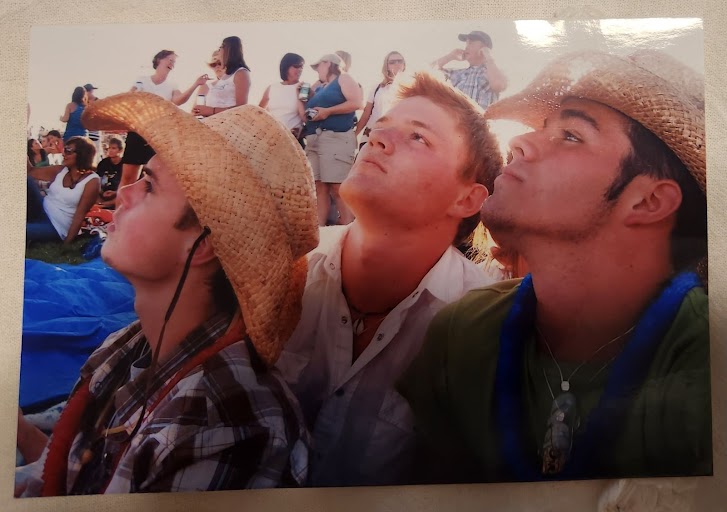
Trevor lived across the street from NOJH, so we would go to his place for lunch. It felt so cool, so rebellious to leave the campus of a junior high to go eat lunch somewhere else. We usually would just heat up burritos or chicken nuggets or slap together a peanut butter sandwich, but then we’d have that 20-30 minutes to just chill on his couch or in his room, or, like most of the time, in front of the computer with music.
I’m becoming old school as I was in the day of using Music Player on a desktop to play some songs while the collage of waves started to draw as the screensaver. Someone would buy the actual album, we’d rip it to the computer, and then we’d insert a blank disc to burn the contents onto it. We had these big black binders that would hold CDs in sleeves. I had a mega-binder that held four CDs to a page and was at least 100 pages deep. Some of the contents inside were real CDs – I remember buying Simple Plan’s No Pads, No Helmets, No Balls album and having to hide it because there were hot girls and cleavage on the front cover – but most were just a gray CD-R that had sharpie scrawled on it.
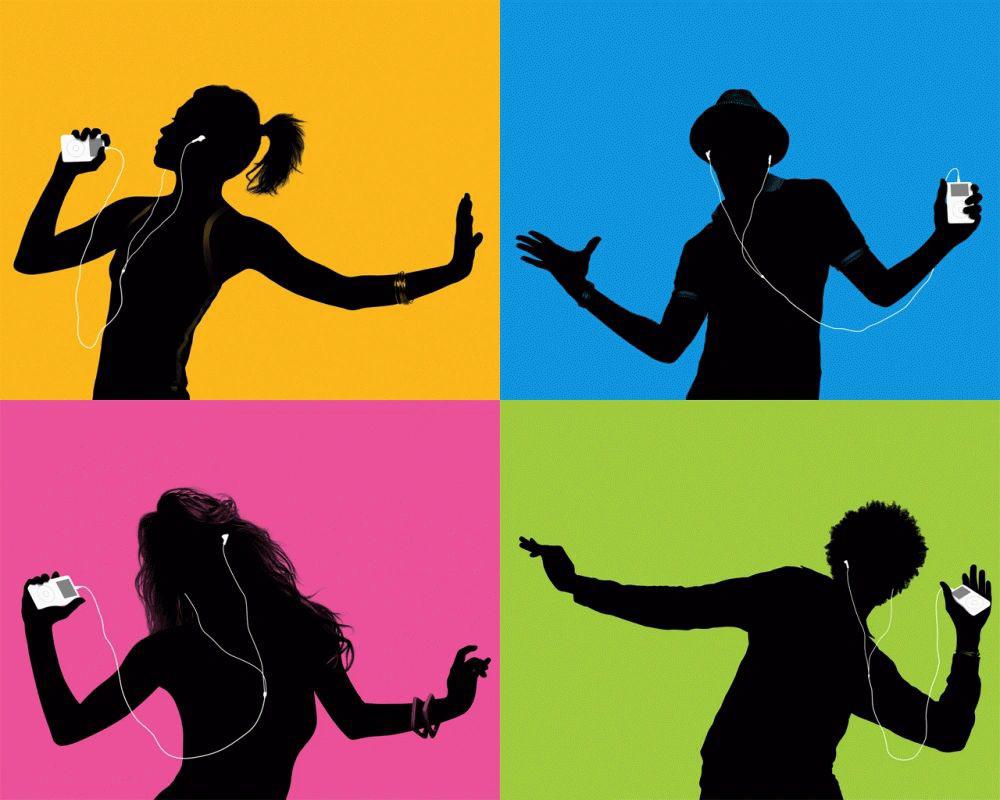
A few years later, iTunes changed the game to just buy songs directly. They’d import straight into your library, and then you’d move the songs to your iPod. It was becoming digital. Yet, we’d still download and build CDs for car rides or stereo systems and you still had to burn your mixtapes if you didn’t have an iPod. I was 16 when I got my first iPod – it was white, had 30 GB of memory, and cost $400 which was my birthday, Christmas, and hey, you got your Eagle Scout present all combined into one.
I had a gray Ford Escort as my high school car. The car’s name was Gus. Since all cars are supposed to be female, it was short for Gustina.
Thinking of Gus and music, she wasn’t fancy enough to play music the way I wanted. And if I wanted Dad’s car, well that was a Station Wagon, so even worse. Instead, I had an FM Transmitter where you’d find an unused FM radio station, mine was always an 88.something, plug the transmitter into your device – portable CD player or iPod – and then you’d get your music through your car’s radio. When that wasn’t ideal, as it would still get staticky, I had a cassette tape adapter aux to rock instead. You’d put the cassette tape into the car and then aux to your device. I was always so jealous of my friends who had an aux port directly in their car’s CD players, but I made it work so my car could always have my music, too.
And thinking of CD players, that was what I grew up on. I teach high school now and once mentioned a CD that had just come out that I really liked. CD, Mr. Godfrey? What are you, old? They said. I can’t help it and have to consciously refer to music as albums, not CDs (imagine the verbiage and reaction for records, 8-tracks…)
I remember saving my money to buy a three-piece CD player and speaker system from Walmart. It could rotate through five CDs and take up an entire shelf in my room. I remember having portable CD players that I’d put in my huge jean short pockets and try to walk delicately so the CDs wouldn’t get scratched, and so my music wouldn’t buffer or skip while I was out and about. There was also the headphone cord dangling out of my pocket and traveling north to my head while tangling up everything along the way. At first, I had headphones that were black with soft, cushy, ear sleeves on them. When I got cooler, I had some that would wrap behind my ears, or I finally got smaller headphones that would go directly into my ears instead of covering them. Before Airpods, Apple would include white earplug headphones with every iPod or iPhone purchase. Wouldn’t you know it, they had a cord they tried to advertise as awesome-sauce, when the reality was you never knew which bud went into which ear or how to avoid being strangled to death by your own doing.
If you couldn’t afford iTunes, no worries as Napster and LimeWire existed to illegally download music. I don’t know how many viruses my computer at home had because of my downloading. Oh, and don’t forget that you had to connect to the internet, via a modem and dial-up, in order to download the songs. Some took hours for that three-minute ballad to complete with spotty connection and spotty source files. All the while, your phone line is dinging the beeps to indicate the line is busy if anyone is trying to call. If my parents were at work, or I was just home alone for a night, I’d be online downloading songs and albums well into the moonlight.
But before the iPod and iTunes, and before I knew what LimeWire was, we would just mooch off each other’s libraries to build up our collections of CDs in those black binders. And on one lunch at Trevor’s house sometime in 2002-2003, I got Take This To Your Grave by Fall Out Boy. It’s on a red disc. In a black Sharpie, Trevor wrote the details on it. I can still picture it. I might still have it somewhere.
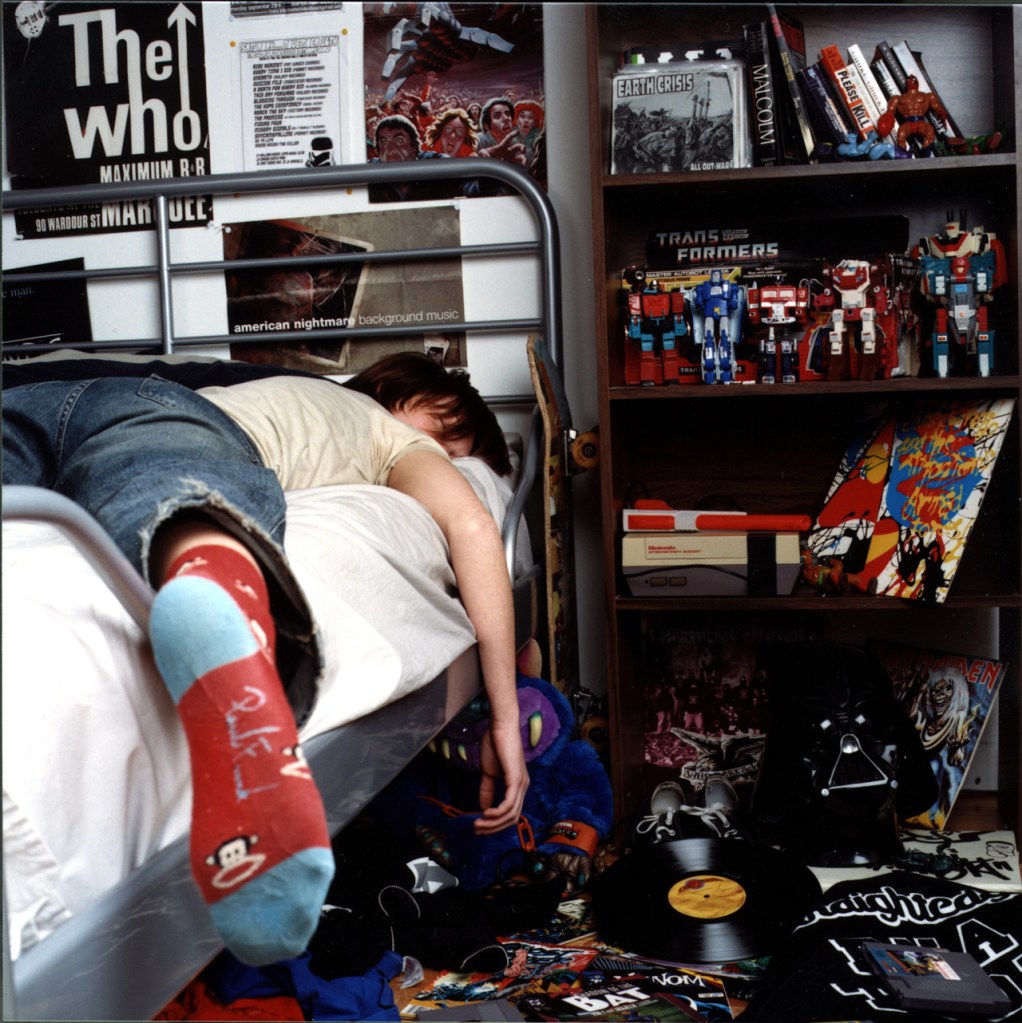
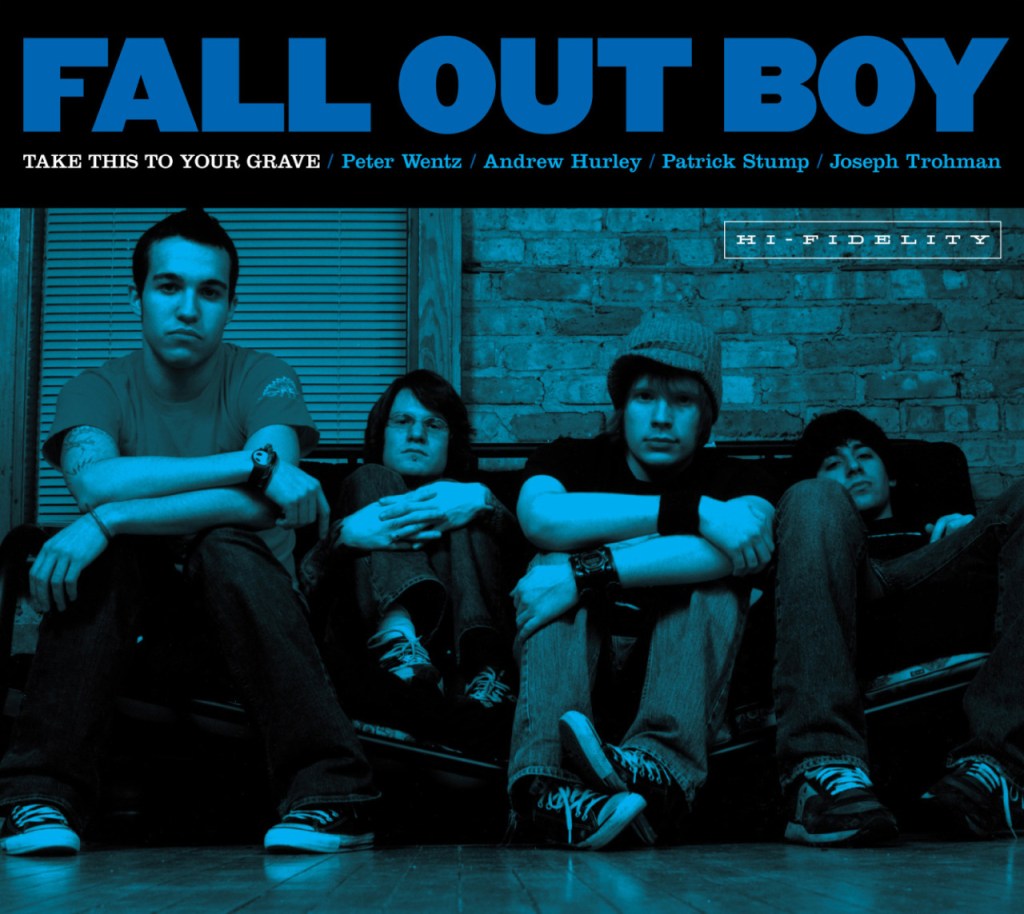
Take This To Your Grave was Fall Out Boys’ debut album, with the actual CD having the title in all caps in this bright blue font and the band sitting curbside against some brick in this faded blue-green overlay. Originally, the band had a different album cover in mind. Pete Wentz, the eccentric bassist, had his girlfriend lying in bed while 80s nostalgia was everywhere around her. On the bookshelves are Transformer toys and The Who posters the wall while an I-Spy for pop culture makes your eyes feast (can you find the Darth Vader helmet?). Making a pretty solid photo, Wentz was pumped. Fueled by Raman, the recording label, less so. They tried to navigate all the legal hurdles to make it possible, but licensing and all the copyrights were just too complicated for every small detail. It was a back-and-forth battle before one small photo session of the group sitting brickside on a broken futon resolved the conflict.
They had released a demo about a year before, but Take This To Your Grave merged those three songs with seven more that they recorded in nine days.
At the time, the album was good, not great, but it has since been pinned as a crucial pivot point in pop-punk and can easily be claimed in the top five for albums of importance in that genre, or even of the 2000s, that helped shape the music industry – along with the success the band has enjoyed since it’s conception.
To prove it, The Alternative Press called the album “a subcultural touchstone” and “a magical transcendent and deceptively smart pop-punk masterpiece that ushered in a vibrant scene resurgence with a potent combination of charisma, new media marketing, and hardcore-punk urgency.” The band expanded upon their evaluation, writing, “There’s no overstating the impact Take This to Your Grave has had on not only the scene (and eventually mainstream culture)” They added, “It launched untold numbers of bands to pick up some musical gear, make noise in their garages and actively participate in this culture. The fact that the album continues to resonate with generations in the years following is a testament to its longevity.”
One of the reasons critics point out Take This To Your Grave’s legacy was the fact that it combined hardcore with punk rock. The band is quick to dismiss that hardcore reputation, but each band member was originally part of separate hardcore bands before taking on a “pop-punk side project.” With Grave, you can hear screamo, unclean vocals, and an edge while also the emotional, upbeat, catchy elements of punk. From that album onwards, pop-punk was essentially created as Panic! at the Disco or All Time Low took notes.
Additionally, the lyrics were purposefully specific to make the album differ from any other radio music. Looking at the band’s history and reputation in the rearview mirror now, their lyricism is what makes FOB most famous. They are clever, they are heartfelt, they tell stories, and they hold deep metaphors. But in 2003, Wentz and Patrick Stump, lead singer, fought constantly over the lyrics. For Wetnz, it had to be perfect. For Stump, it was more about the melodies. Instead of breaking apart – which was presumably close – the two formed a perfect duo to complement one another’s preferences in songwriting and composing. Within Grave, each song has intentional meaning; 10 songs make 10 chapters of a long-winded story that could be told.
And so it became iconic, cementing the band as a mainstay in the industry they created. With it, they cemented the use of random, lengthy titles for albums of the future. With it, they cemented Wentz’s quest for fame and stardom. And with it, they cemented a new last name for Patrick Stumph. As each member of the band is listed on the front cover of the album, Stumph deliberately chose to leave the H off his name and become immortalized as a Stump for the rest of forever.
This past summer, my wife and I went to Fall Out Boy’s concert when they stopped in Salt Lake City on their “So Much For (Tour) Dust” tour. Two decades later, I saw the band on stage for the first time.
It took us nearly three hours to get to the venue, and we parked more than a mile away, and the water was $5 a bottle with no drinking fountains on-site, and we had vacationed with extended family the full week before so we were already tired, but we were there as Bring Me The Horizon screamed their set and touched their lead singer as he walked the arena seats during the opening act. Then, as the night got dark, the stage turned purple and the Boys came out playing Love From The Other Side, their new album’s lead single, as Wentz ripped on his guitar and had it blasting flames from a built-in flamethrower.
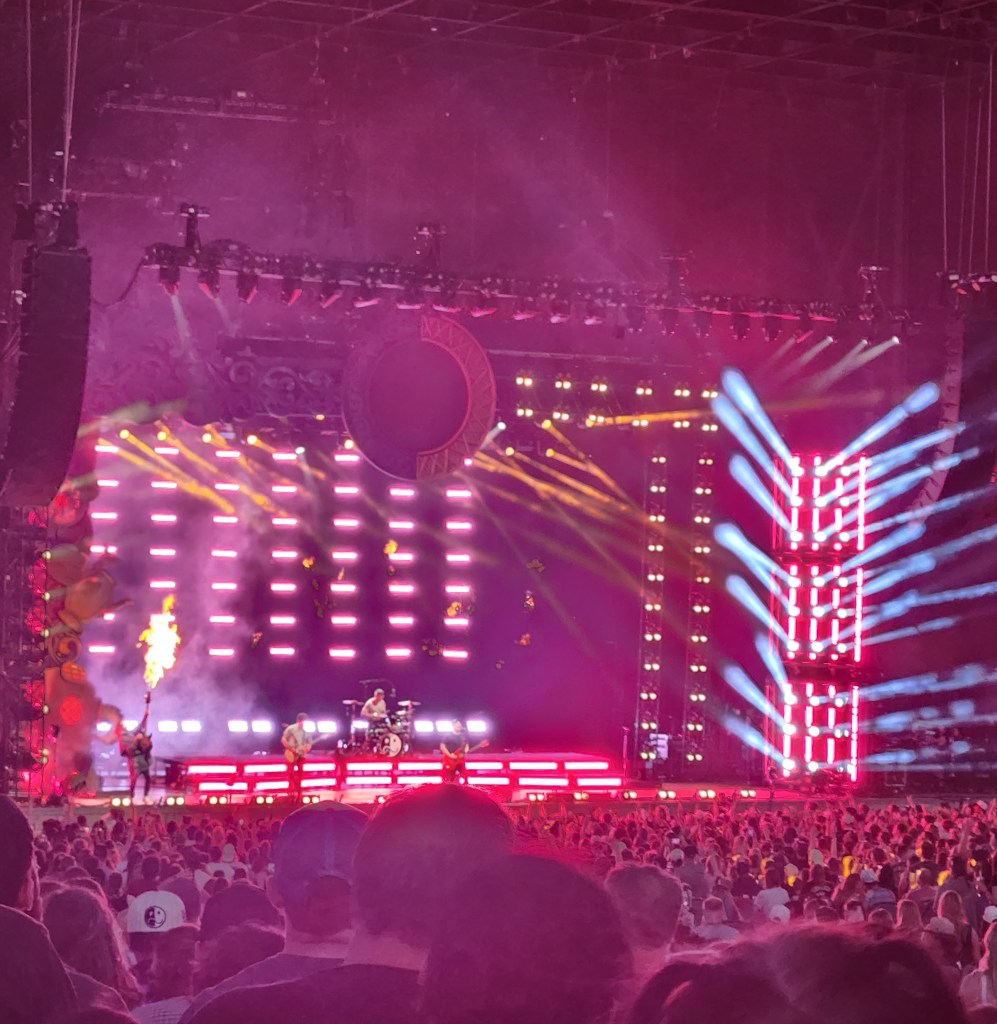
Perhaps five songs in, FOB dusted off the old record and played three straight songs from Grave: Chicago is So Two Years Ago, Grand Theft Autumn, and Calm Before the Storm.
Chicago is my favorite from the album, and in my top five of FOB songs all-time, and it hit just like it should. The contents of this essay flashed before my eyes as I thought about Trevor and Kortland, thought about my musical identity forming in junior high, and thought about why and how FOB songs like it could punch a gut and be so long-lasting. I sang my heart out as my wife pointed her camera my way to film my reaction. During a chorus, she gave me a kiss on the cheek; the kind that reminds you why and who you fell in love with in the first place – you know, when you see someone you love excited and happy and in their element, throwing off the everyday personality and mundane blues to freely express their spirit – that was the feeling I had and she saw. With it came a new reason to forever enshrine Chicago’s chorus in my hall of fame, as if the melody stopping to a halt and it’s just Stump’s vocals perfectly balancing each syllable as the drums come to support it and (originally on the album) Justin Pierre of Motion City Soundtrack plays tag to finish the chorus wasn’t already enough.
With Autumn, we sang together – which she again caught on video – as the stage turned a somber blue tinted in the purple haze as the single that changed it all echoed off the Utah mountains. Picking up where Chicago leaves off, the song starts with no instruments and just Stump’s unique voice singing the question that became the tagline: Where is your boy tonight? Rewinding back to my iPod, I can picture this song’s music video playing on my small screen, where the band stomps in the snow outside a barn as their breath vaporizes in the frigid air. I forever have two automatic images when I think of the music video: the hot girl has some underwear poking out from her pajamas at the beginning and then the hot girl makes out with a guy in a van, even after he had been filming her. Music videos, man.
As the evening played out – a really awesome show overall – the band ended with one more banger from Grave, which plays out with some yelling and moshing as the electricity twirls around you in a haze of energy that encapsulates the feeling of youth.
Just as it was the last song on the concert setlist, Saturday was the last single from the debut album, too. When the band imagined creating an album, they knew they had three songs from EPs and other projects that they could refine to get on the tracklist. Then, the band worked on a new seven, doing everything in nine days while sleeping in the makeshift studio of a warehouse on the floor. This place, funny enough, gave them free soda, which they eventually asked to be a few bucks instead so they could buy some peanut butter and eat instead of drink.
As they grinded out the process, they were stuck on the last song for the album. Stump had one in mind he was keeping to himself in case the group flamed out but instead pitched it to the squad: Saturday. It was one of the rare songs he and Wentz fleshed out together in all the ways, with both thinking it was the best song on the album and the best representation of what the band wanted to be. Connecting back to their hardcore days, Wentz even screams in it.
Fittingly, Saturday tells the feelings and story Patrick had as he approached high school graduation, being unprepared for adulthood and not ready to grow up quite yet. “I’m good to go,” the song says, “but I’m going nowhere fast,” words they heard as they chased rock and roll fame as outcast emo kids in the hidden corners of high schools. Something we can all relate to, they looked around at peers and saw brighter, better futures for everyone besides themselves. Nonetheless, they are going, hoping for something golden. Even if they are on their own and even if they fail, they are going towards those elusive Saturdays. Lyrics:
I’m good to go for something golden
Though the motions I’ve been going through have failed
And I’m coasting on potential towards a wall
At a 100 miles an hour
As Patrick collaborated with Pete, Pete wrote his name into the story as the two would dream together of what comes next. Together, they’d attack the Lost Astoria – perhaps an old, historic concert hall in London, or perhaps the landmark of innocence from The Goonies on Oregon’s coast, or perhaps a jealous dig at a rival band’s instant success in their So Long, Astoria album – but they’d attack it together. Lyrics:
Pete and I attacked the Lost Astoria
With promise and precision and a mess of youthful innocence
And I read about the afterlife
But I never really lived more than an hour (more than an hour)
Regardless, the mantra of Saturday is echoed repeatedly: two more weeks, my foot is in the door – Saturday. With the unknown ahead, and all the opportunities you could just wish for coming up, Saturdays bring excitement and anxiety, which is why they sing that they can’t sleep. One part I especially love is the description of the Saturdays as being “open doors that “were open-ended.”
What would come next for the band from Chicago?
What would come next after being a little 7th grader? What would come next for friend groups?
What would come next in a love for music?
For them, and for me, the open doors were a lot of good.
 Steve Godfrey Writes
Pingback: Steve Godfrey Writes