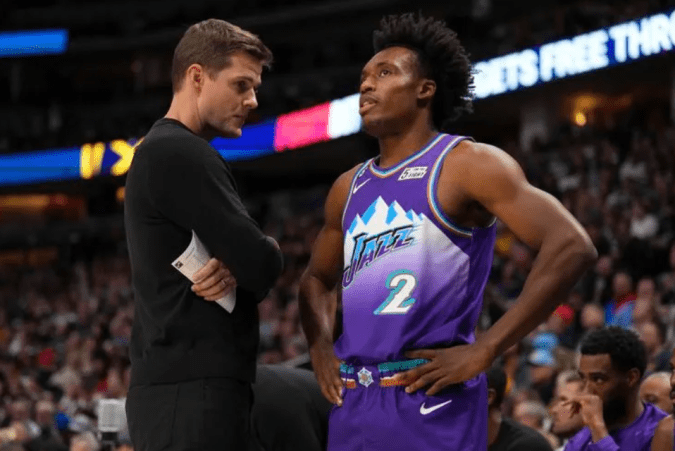
As the NBA trended towards younger coaches making the plunge as first-year head coaches, the Utah Jazz followed suit last year by tapping Will Hardy as their man for the future. After his inaugural season in a five-year contract, the hire feels relevant in the NBA landscape as a whole, and also promising to fans particularly invested in the team that plays in Salt Lake City.
Subscribe to get access
Read more of this content when you subscribe today.
Why go young?
When the 2023-24 NBA season tips off, two new head coaches will pace the sidelines for the first time in their careers: Darko Rajakovic with the Toronto Raptors and Adrian Griffin for the Milwaukee Bucks. The year before, Hardy was part of a trio of newcomers on the sidelines, alongside Darvin Ham (Lakers) and Joe Mazzulla (Celtics). And going back one more year, 2021-2022, the NBA saw Ime Udoka (Celtics), Chris Finch (T-Wolves), Chauncey Billups (Blazers), Jamahl Mosley (Magic), Wes Unseld Jr. (Wizards) and Willie Green (Pelicans) make the jump as first-year coaches.
That’s a considerable influx of new head coaches across various teams. By my count, 11 men joined the head coaching fraternity, meaning more than a third of the 30 NBA franchises debuted a first-timer in that span. This trend of hiring more first-year, young coaches in the NBA can be attributed to several factors that have shaped the league’s coaching landscape in recent years:
- Emphasis on player development. In the modern NBA, player development has become a top priority for teams. Young coaches who have a deep understanding of the game and can connect well with the players are often seen as ideal candidates to nurture and develop young talent. These coaches can relate to players on a personal level and provide guidance that resonates with the younger generation of athletes. If you look at the list of teams mentioned above, the Lakers and Bucks are the clear exemption with veteran-heavy teams. The Jazz, along with the Wizards, Magic and the Pelicans, are squads with young rosters and even more young talent likely to pass through the door soon given the draft assets in play. Therefore, player development will be key for jumping into the next tier of success.
- Analytics and innovation. The NBA has embraced advanced analytics and new technologies that have revolutionized the game’s strategies and tactics. Young coaches, often well-versed in these modern methodologies, could be seen as better equipped to incorporate analytics-driven decision-making into their coaching approach. Younger coaches typically bring fresh perspectives and innovative ideas into the league. As the game evolves, teams look for coaches who can adapt to new trends and find innovative ways to stay competitive.
- Communication and relatability. Effective communication is vital in coaching. Young coaches often excel in relating to the players and understanding their perspectives, creating a strong bond and trust between coach and team. This ability to communicate and build relationships has become highly valued in NBA coaching searches. One thing I always find interesting is the former players that end up on coach benches. Billups, Green, and Ham all had lengthy careers as players in the NBA, with Billups being the most successful. Jason Kidd (Mavs), Tyronn Lue (Clippers) and Steve Kerr (Warriors) are players from my childhood who are now full-time coaches.
Are these the right hires? It’s subjective, hard to say. Nick Nurse won a championship in his first year coaching in Toronto, as did Lue with the Cavs in 2016 and Kerr with the Warriors the year before. But for every instant success story, plenty of rookie coaches miss the playoffs altogether, especially since they’re often hired to teams in transition. Consider this: Since 2000, 43 of the 79 first-time coaching hires have tallied an overall winning percentage of .400 or better. That number isn’t awful, but it’s not making the playoffs, either. At 37-45 last season, Hardy fits right in line with this statistic, hitting a .451 winning percentage.
It’s important to note that while the trend of hiring young coaches has become more prevalent, experience and proven track records still hold weight in coaching decisions. Many teams seek a balance between youthful energy and coaching experience, with the ultimate goal of finding the right fit to lead their teams to success in the ever-competitive NBA landscape.
Additionally, it’s essential to remember that coaching success in the NBA is a complex combination of factors, and immediate success as a first-year head coach should not be the sole measure of a coach’s abilities. Many successful NBA head coaches, including Erik Spoelstra, experienced initial struggles in their early seasons before ultimately becoming highly accomplished and respected leaders. Need a more recent example? Look what Denver just accomplished by sticking with Michael Malone after the team missed the playoffs in his first three seasons in high altitude.
To read more, published by Salt City Hoops, click here.
 Steve Godfrey Writes