Last week Sports Illustrated authors Ben Golliver and Rob Mahoney revelaed their top 100 players of 2019. As they counted down, the Jazz starting five peppered within the last 60 spots. The only other team to accomplish such a feat was NOT the Golden State Warriors, but the Boston Celtics.
To read Sports Illustrated’s extensive piece on all 100, click here.
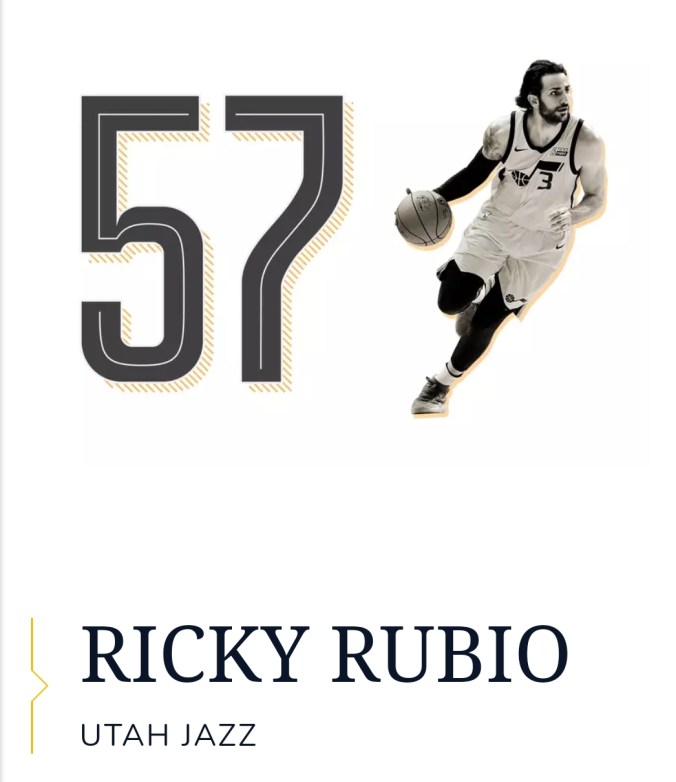
Ricky Rubio and Joe Ingles start the countdown as they enter the conversation at #57 and #56 respectively. Rubio sits a notch above Jeff Teague, which is interesting given the two were essentially traded for each other last summer in a three-team transaction. As SI noted, Teague is “a scoop of vanilla ice cream with no cone or toppings. He satisfies basic needs and rarely excites.”
Teague is good. Teague is average. There’s nothing special about him or his game. He’s there on the court. He does good things. He isn’t necessarily a game-changer, which can be both good and bad.
He is also 30 while Rubio is still drinking from the fountain of youth at 27. Sports Illustrated did another piece specifically on Rubio highlighting his resurgence in Utah last season. Consider it another advantage that Rubio has over Teague in that Tricky Ricky progressed, adapted, and evolved within his new team. The Utah Jazz system took his shooting to the next level and unleashed his playmaking to a new degree. As Rubio continues to adapt to Utah’s system, while learning the team in more depth too, the Jazz ceiling is high. It may feel like Rubio has been around for forever due to as a 16-year-old YouTube sensation and Spanish prodigy, but he is now entering the prime years.
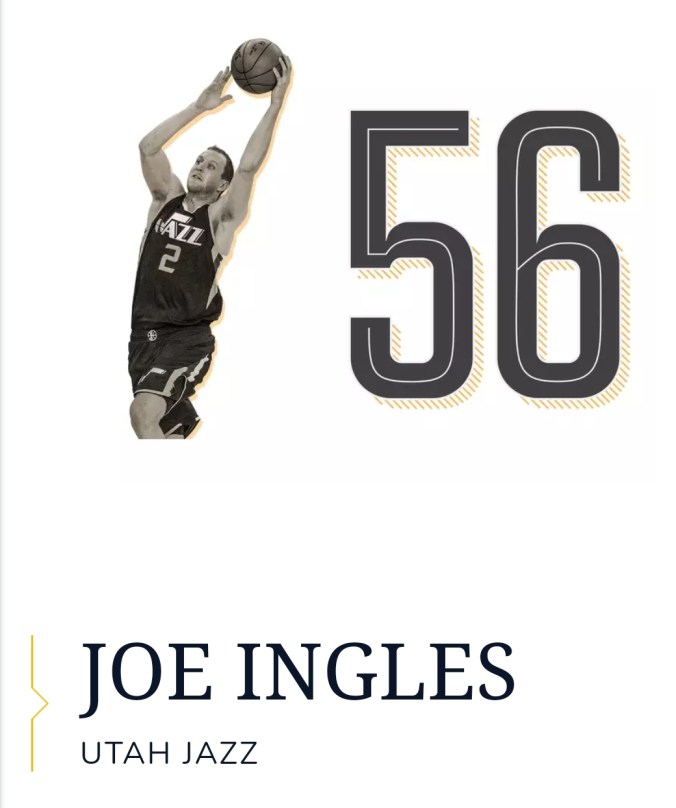
Ingles, on the other hand, is put ahead of Harrison Barnes which is another perfect benchmark. The two are strikingly similar as players who prefer the small forward position but can slide onto bigs when needed. Both also have the ability to fill a stat sheet and do a little bit of everything. However, not only is Ingles on a far better contract (Barnes will make 25 million this year and 25 million next year), but Ingles is also the better shooter (obviously). Those in Utah know Ingles’ value as a glue-guy, do everything on defense, the pest and pesk, and the heart and soul of Utah basketball and culture. His value is invaluable, but he also has the skills and game to match exactly what the Jazz team needs.
With that in mind, Barnes is cast in Dallas to be the lead option, but that doesn’t fit him. He was in Golden State as a 5th option, and that didn’t fit him either. Barnes is more athletic and has more potential now, but his game and demeanor is that of a glorified role player. For that reason, perhaps Barnes should look to Ingles to model his game.
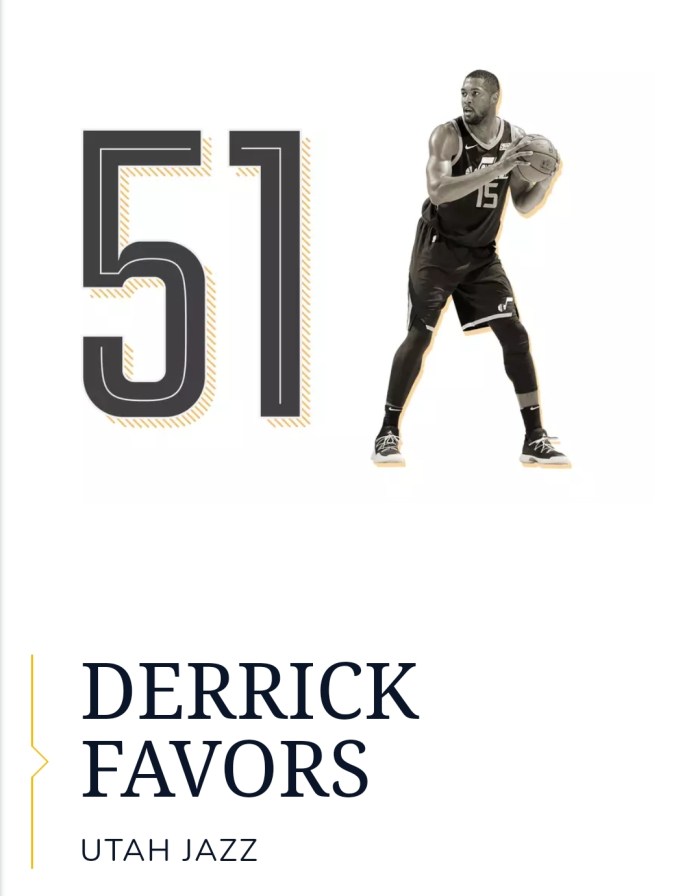
Derrick Favors slid on in at #51, many spots higher than DeMarcus Cousins at 68. The back-to-back champs from the bay didn’t have five in the top 60 because of Boogie and many wonder if this is an oversight to place Favs above the All-Star.
Admittedly, SI noted, “If healthy, Cousins would have placed in the top 25, but SI’s Top 100 is a one-year exercise, and this ranking assumes Cousins will miss roughly half the season, play reduced minutes upon his return, and perform at roughly 60% of his capabilities due to his age and the serious nature of his injury.”
It’s also worth considering that regardless of injury, Cousins hasn’t played in a playoff game nor elevated his team’s play throughout his career. On the other hand, Favors is a key cog in the Jazz engine.
Side note: have you seen Favors mouth off, kick a ball, get ejected, or lash out reporters? Didn’t think so.
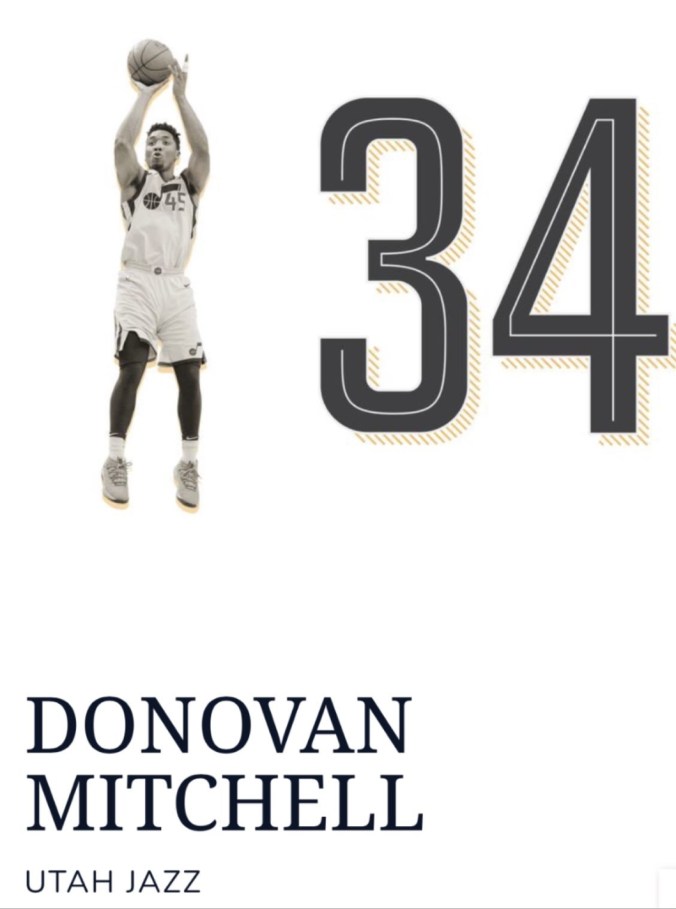
After year one, in which he took the league by storm, Donovan Mitchell popped in at 34 in Sports Illustrated’s rankings. Over and over again, the comparisons to Dwayne Wade or Damian Lillard have penetrated the Utah air, but Golliver makes the case that the rookie year sensation reminded him more of a young Derrick Rose.
Golliver says, “the recent star that Mitchell most embodied down the stretch was a young Derrick Rose. The unadulterated calm and confidence. The willingness to sacrifice life and limb to get to the rim. The savior scoring role on a roster built for defense. The ability to get veteran teammates to buy in—fully and eagerly—to everything he was selling. The measured responses to stunning triumphs. The euphoric embrace from his home crowd.”
The points are valid, especially the idea of Mitchell’s relationship with the home crowd. After one season, Mitchell is loved by fans across the state of Utah. A star is on our team, they say. A star enjoys being in our state, they say. A star embraces BYU, USU, UofU; does random acts of kindness and services wherever he is; joins the conversations on Twitter; crashes 4th of July parties; all of that and so much more.
(biased opinion: I love Spida.)
Now, if you ever want to engage in a social media firestorm, suggest that the Spida is a better player than Phoenix Sun Devin Booker. Booker is actually younger than DM (Booker is 21, DM is 22), and he did have that high scoring affair early in his career (70 vs the Boston Celtics, but his team still took the loss). But guess what? Sports Illustrated also believes DM is a better player as Booker was ranked #50th overall. Booker averages more assists, but I’d argue that Mitchell is the better facilitator as we will see in years to come as he handles the ball more frequently or sees the court more clearly. Booker can score. That’s it. Defense? Well, LOL.
Give me Spida all day, ev’ry day.
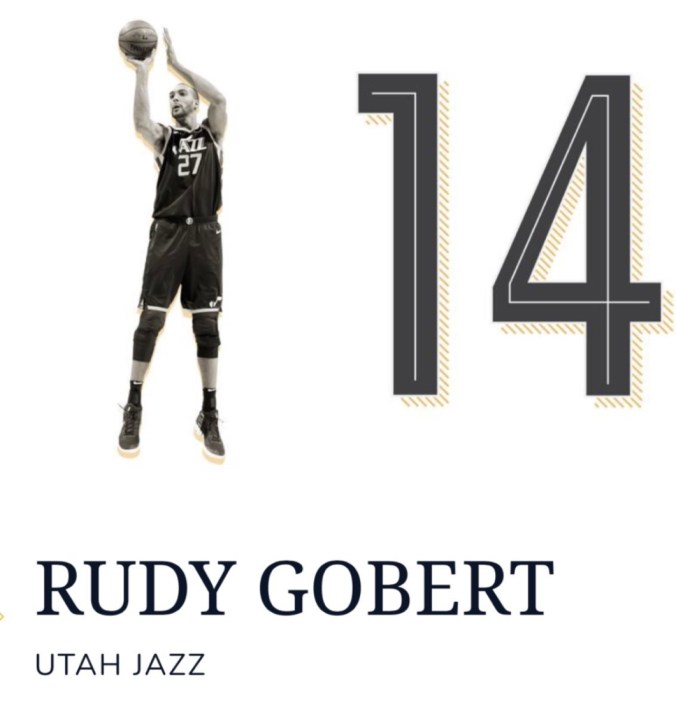
Draymond Green sits at #13 and the reigning Defensive Player of the Year is at #14. I have no problem with that.
When you break it down, both alter a team’s strategy but in different ways. Another easy comparison is the fact that both are annoying and have a tendency to get under the skin. And duh, both play defense at a high level.
Green has been more consistent and has had better health. You also need to consider his impact in the postseason or in big games. He knows when to show up and when he is needed. When those moments arrive, he balls out. In fact, hats off to Green who led Golden State in minutes, rebounds, assists, blocks, and steals during the playoffs (as noted by SI). Sports Illustrated also points out a telling stat: “despite being listed at 6’7”, Green led the NBA by defending 158 shots from within six feet during the playoffs. He allowed just 54.4% on those shots, a postseason rim-protection rate that’s comparable to long-armed shot-blockers like Davis and Clint Capela.”
Gobert has essentially played three seasons as a starter and difference maker. Before that, he was still developing and learning afar. In the last three seasons, Gobert has had a huge impact – the Gobert effect as called on TV – but he has also been plagued by injuries. The biggest if with Rudy is always about health but when healthy, he has the potential to suffocate an opposing team. Green has all the tools now and makes the larger impact now, but Gobert has the potential to be a Monstar, albeit health permitting.
 Steve Godfrey Writes